

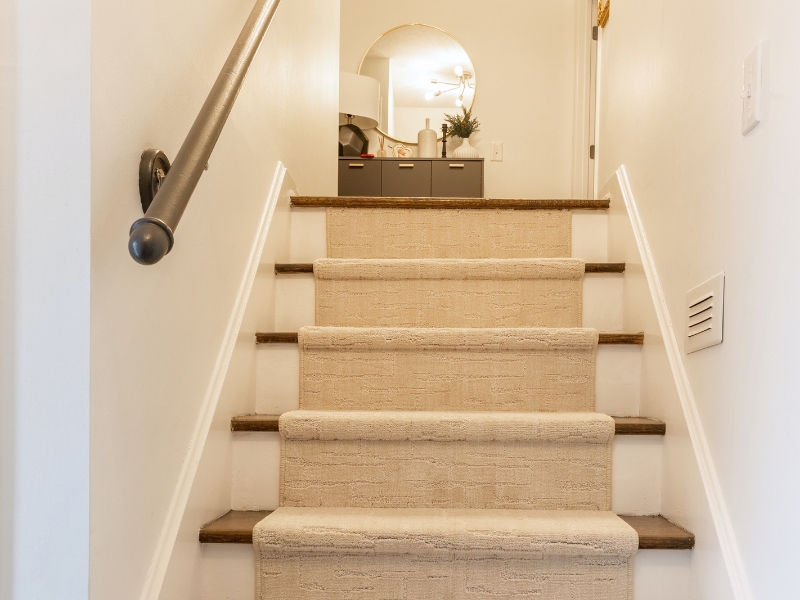
Stairs are one of the most frequently used surfaces in a multi-level home, yet they are often overlooked when homeowners plan a flooring upgrade. The floors in bedrooms, kitchens, and living rooms tend to receive most of the attention, while the staircase is treated as something that simply connects one level to another. In reality, the flooring on your stairs can influence comfort, noise, safety, and the overall visual flow of your home.
For homeowners in Beech Grove, IN, carpet can be an especially practical choice for stairways. The right carpet does more than soften the appearance of a staircase. It can create a more comfortable surface underfoot, reduce the sound of footsteps, and give the transition between floors a finished appearance. If you are considering a flooring update, exploring the carpet flooring options available from Griffith Flooring Service can help you see how different textures, colors, and styles can work on stairs.
Why Stair Flooring Deserves More Attention
A staircase experiences a unique type of traffic. Unlike a living room floor where people generally walk across a relatively flat surface, stairs receive repeated foot placement on smaller individual areas. Every step is part of a person's movement through the house, which means the flooring needs to feel comfortable while also providing a visually consistent and practical surface.
Stairs can also become one of the most noticeable transition points in a home. If the flooring downstairs, upstairs, and on the staircase all have different colors or textures, the staircase can make those differences feel more obvious. Choosing carpet carefully can help create a visual bridge between the two levels.
This is particularly useful in homes where the main living areas use hard flooring while bedrooms or upstairs rooms use carpet. The staircase can become the element that connects the two areas instead of making them feel like completely separate parts of the home.
Carpet Can Reduce the Sound of Footsteps
One of the most noticeable differences between carpeted and hard stair surfaces is sound. Footsteps on hard flooring can travel through a home, especially when someone is moving quickly up or down the stairs. Carpet and its underlying padding can help absorb some of that impact noise, creating a quieter atmosphere.
This can be particularly valuable in busy households. If someone is working from home downstairs while another family member is moving between bedrooms upstairs, reducing unnecessary footstep noise can make the home feel calmer.
The acoustic benefit is not limited to stairs themselves. When carpet is used throughout an upstairs hallway or bedroom area, it can contribute to a softer overall acoustic environment. This can be useful in homes with children, multiple occupants, or rooms that are frequently used for work and study.
Comfort Matters More on Stairs Than You Might Expect
Stairs are a surface that people encounter repeatedly throughout the day. A carpeted staircase can provide a softer sensation underfoot than many hard surfaces, making everyday movement feel more comfortable.
The texture of the carpet also contributes to the visual character of the staircase. A subtle textured carpet can create a warm, traditional appearance, while a cleaner, more contemporary carpet can help a staircase fit naturally into a modern interior.
The goal is not necessarily to make the stairs stand out. In many homes, the best result is a staircase that feels like a natural part of the overall design.
Choose a Carpet Color That Works With Both Floors
One of the most important decisions when carpeting stairs is color. Because the staircase connects two levels, it needs to relate to the flooring around it.
If the lower level has wood-look vinyl in a warm oak tone and the upstairs uses neutral carpet, for example, a warm neutral stair carpet can create a gradual transition. The carpet does not have to match either floor exactly. Instead, look for shared undertones that allow the materials to relate visually.
This approach gives you more flexibility than trying to find an exact match. Flooring materials can have different textures and reflect light differently, so attempting to match colors perfectly can sometimes make the difference more noticeable rather than less.
Patterns Can Work on Stairs Too
Homeowners sometimes assume that stair carpet needs to be completely plain. That is not necessarily the case. A subtle pattern or multi-tonal texture can add visual interest and help the staircase feel like a deliberate design feature.
Small-scale patterns are often easier to integrate than large, dramatic designs. Remember that the carpet will be installed across individual stair surfaces, so the pattern will not always appear exactly as it does on a flat sample.
A subtle pattern can also provide depth without forcing the rest of the room to become more decorative. If the surrounding flooring and walls are simple, the staircase can introduce texture while remaining understated.
Think About the Staircase as Part of the Whole Floor Plan
Before selecting carpet, look at everything that can be seen from the staircase. What flooring is visible at the bottom? What is visible at the top? Are there open railings that expose the staircase from the living room? Is the staircase positioned directly beside a hallway?
These questions matter because the staircase may be visible from several areas at once. A color that works beautifully when viewed from one angle may feel different when seen alongside another floor.
Taking samples into the actual home can therefore be extremely useful. Compare the carpet with your existing flooring, wall colors, trim, furniture, and natural light before making the final decision.
Maintenance Should Be Part of the Decision
Because stairs receive repeated foot traffic, carpet selection should take everyday maintenance into account. A busy family staircase may need a different carpet than a staircase leading to an occasional guest room.
Color variation and texture can affect how everyday marks appear. A completely uniform, very light surface may show changes more readily than a subtly patterned or multi-tonal carpet. This does not mean homeowners should automatically choose a dark carpet. It simply means the carpet should be selected with the actual household in mind.
Regular vacuuming and appropriate cleaning practices can help keep stair carpeting looking its best. Professional installation is also important because the staircase experiences repeated movement and needs to be fitted correctly around each step.
Carpet Can Connect Different Flooring Styles
One of the most interesting uses for carpet on stairs is as a design transition. A home does not need to use the same flooring everywhere. In fact, different materials can make individual rooms more functional and visually interesting.
Vinyl may make sense in a kitchen, entryway, or other area where easy maintenance is important, while carpet may be more appropriate in bedrooms and quiet living spaces. The staircase can connect these different zones through color, texture, and carefully planned installation.
The result is a home that feels coordinated without looking repetitive.
Give Your Staircase the Attention It Deserves
A staircase is more than a passage between floors. It is a high-use surface, a major visual transition, and an opportunity to improve the comfort and acoustic character of your home. Carpet can bring together these practical and design considerations in a single flooring choice.
If you are considering carpet for stairs, bedrooms, hallways, or other areas of your Beech Grove home, explore the carpet selection from Griffith Flooring Service. When you are ready to discuss colors, styles, installation, or the best flooring approach for your home, contact Griffith Flooring Service to start planning your project.


